

Q1:Your career runs from PR at National Geographic to digital branding to founding DreamWeb India, and now to building a handloom brand of your own. What is the common thread, and what did each chapter teach you that you still use today?
A1. I chose my career in public relations which gave me the wonderful opportunity to work with top
brands in the consumer and entertainment space including National Geographic Channel.
Over the years, I moved places but post covid is when I realized the need to build something of my
own. That is when DreamWeb India was born. DreamWeb India was built for the B2B space,
with Integrated Marketing Communications at its core. The common thread across my work has
been building brands through targeted messaging, meaningful storytelling and the right platforms.
In all this, Inspiration is key. If something inspires you — a powerful story, an unexpected innovation,
a new perspective or even a hidden truth — use it creatively in your work. Inspiration can become
an idea, an idea can become a story, and a story can become a powerful brand narrative.
Good work needs a platform. Inspiring people need a platform. And with the right use of MarTech,
brands can go beyond communication — they can create demand, discover new audiences and even
build new markets. That, to me, is the intersection of communication, creativity, technology and
purpose — and the space where I love to work.
Q2: As a personal branding strategist, you've seen many founders try to build a public presence. What separates a founder brand that earns lasting trust from one that only chases visibility? One must understand that lasting trust is not built overnight. It takes time, consistency and repeated proof of value.
At the same time, today’s market is extremely competitive, with new brands emerging every day.
Having a good product or service is no longer enough. Brands need a robust marketing strategy, but
equally important is the role of the founder in building visibility and credibility.
Founder-led branding has become a powerful way to humanise a business and build trust with
customers, partners and communities.
Podcasts, vlogs and behind-the-scenes content are great channels to explore. They allow people to
see the person, the thought process and the journey behind the brand — not just the final product.
Personal branding, when done with clarity, consistency and authenticity, can be extremely
powerful. Ultimately, people may discover a brand through marketing, but they build relationships
with the people and stories behind it.
Q3:You believe every handloom tells a story. What pulled you toward handloom, and how do you turn traditional craft into a brand that modern buyers feel connected to?
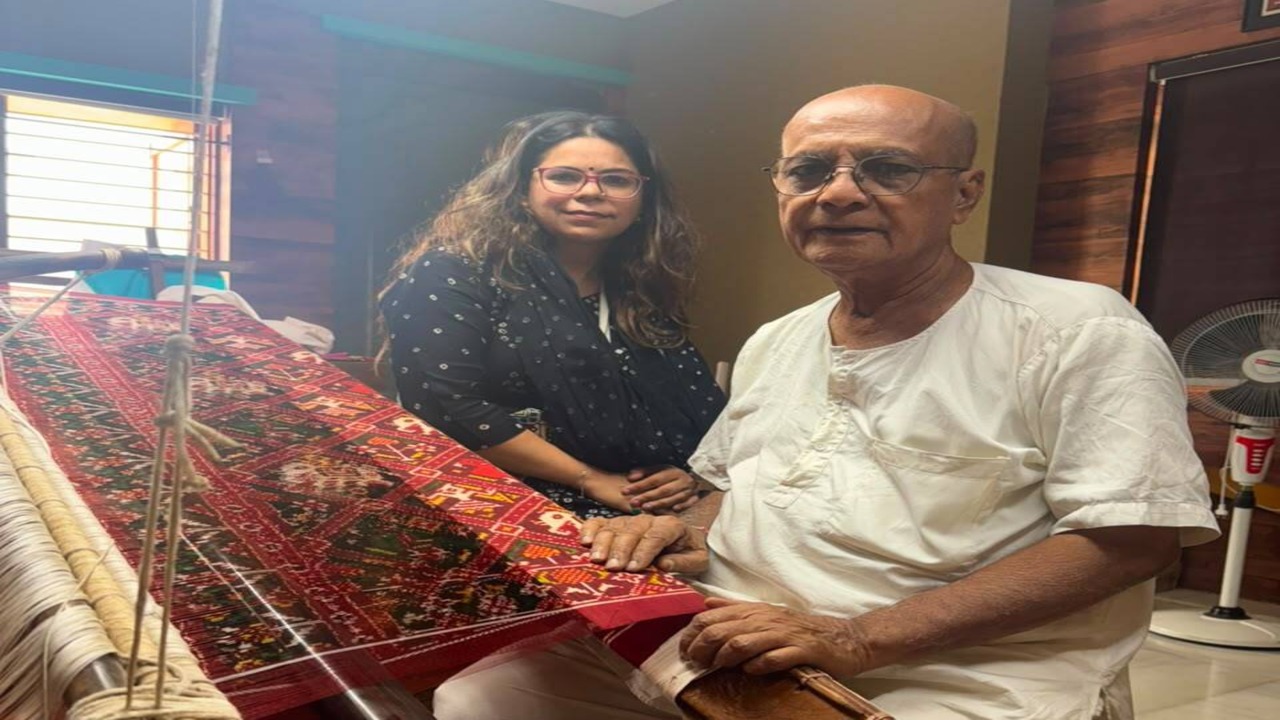
Absolutely. A handloom saree can take months to make. But behind every saree is a person — a weaver who may have spent decades mastering the craft, often carrying forward a tradition passed down through generations.
When we stop buying handloom, we don’t just stop buying a saree. If there is no demand today,
there may come a time when some of these beautiful and delicate weaving traditions simply
disappear. I want to take this story to every modern Indian woman.
Advocating for sarees, curating traditional handloom and bringing sarees directly from weavers and
their places of origin is the mission behind House of Sodesii. I often meet women who love sarees
but feel confused or uncertain about what to buy, how to identify a weave, how to style it or
whether a particular saree is worth investing in. I want to change that.
Through House of Sodesii, I try to give women the information, context and confidence they need to
make more informed choices — and, in the process, feel more connected to the rich textile heritage
of India.
House of Sodesii was born out of my love for wearing sarees and my fascination with the traditional
weaves of India. It is my passion project — one that brings together my love for sarees, my respect
for the people who make them, and my belief that heritage survives when we choose to wear it,
celebrate it and pass it on.
Q4:After building brands for startups and corporates, what is the biggest lesson you have brought into your own venture? What do you do differently now that you are the founder and not the strategist?
As an entrepreneur, I wear many hats. Running a business is certainly not just about marketing. The
ability to take risks, experiment, start from ground zero and sometimes do the most unexpected or
ordinary jobs has taught me some of my biggest life lessons.
The biggest one is simple: every person who comes into your life is your teacher. So, every day, I
choose to be a student, not a boss.
When you approach business with a learning mindset, you remain open to new ideas, perspectives
and possibilities. You listen. You adapt. You adopt. And you keep moving.
Entrepreneurship has also taught me that time is your most limited resource. There are only so
many hours in a day, so I consciously plan my day around four things — planning, execution,
networking and research. Perhaps, this is what I do differently.
Q5:You are active in communities like Ladies Who Lead and WICCI, and you volunteer with causes such as Udayan Care. How have community and giving back shaped the way you lead and do business?
I have always been a strong believer in women networking for business and personal branding. The
value goes far beyond exchanging business cards or making professional connections. Shared goals,
collaborative opportunities, motivational conversations, inspirational stories, exposure to new
experiences and, most importantly, enduring friendships — these are just the tip of the iceberg.
It is difficult to put the true value of women supporting women into words. There is something
incredibly rewarding about being part of a community where women encourage each other, open
doors for one another and share what they know. You learn new skills from your fellow colleagues
through community work.
During my association with WICCI, we had a campaign called “She Means Business.” Just three
words. But they meant so much more. It represented ambition, independence, collaboration,
resilience and the idea that when women come together, they can create opportunities not just for
themselves, but for each other.
For me, women networking is not just about building a professional network. It is about building a
community where women can learn, grow, collaborate and lift each other as they rise.
Q6:Many women in India are thinking about starting up or building a personal brand. What is the one piece of advice you would give them, and where do you see House of Sodesii in the next five years?
Business is a lifelong commitment.
Think hard before taking the plunge. Understand what you are signing up for — the risks, the
uncertainty, the long hours and the responsibility. But once you have made the decision, commit to
it wholeheartedly. I believe that when you genuinely put your mind and energy behind something,
you begin to find opportunities and support along the way.
I also believe personal branding is essential in today’s business environment. Read about it,
understand what works for you and start small. You don't need to have everything figured out from
day one. What matters is clarity, authenticity and consistency.
For me, House of Sodesii is more than a business. It is a movement — a growing saree culture with
a larger purpose of reviving and celebrating handloom.
We are building an online community “bonded by love for sarees” while taking this beautiful Indian
fabric to a wider, global audience through digital storytelling and advocacy.
What excites me is seeing women from diverse professions embracing sarees beyond traditional
occasions — wearing them to work, at formal events and in spaces where the saree becomes a
statement of confidence, identity and contemporary Indian culture.
The vision for House of Sodesii is to grow this ecosystem further. We plan to establish a stronger
retail presence across Delhi and NCR, alongside regular exhibitions, trunk shows and pop-ups that
allow people to experience the weaves, meet the stories behind them and discover handloom in a
more personal way.
We also hope to work closely with relevant government bodies and institutions wherever our goals
align, particularly in creating greater awareness and opportunities for India’s handloom ecosystem.
The heritage survives not just when we preserve it, but when we make it part of our everyday lives.
Join the conversation