
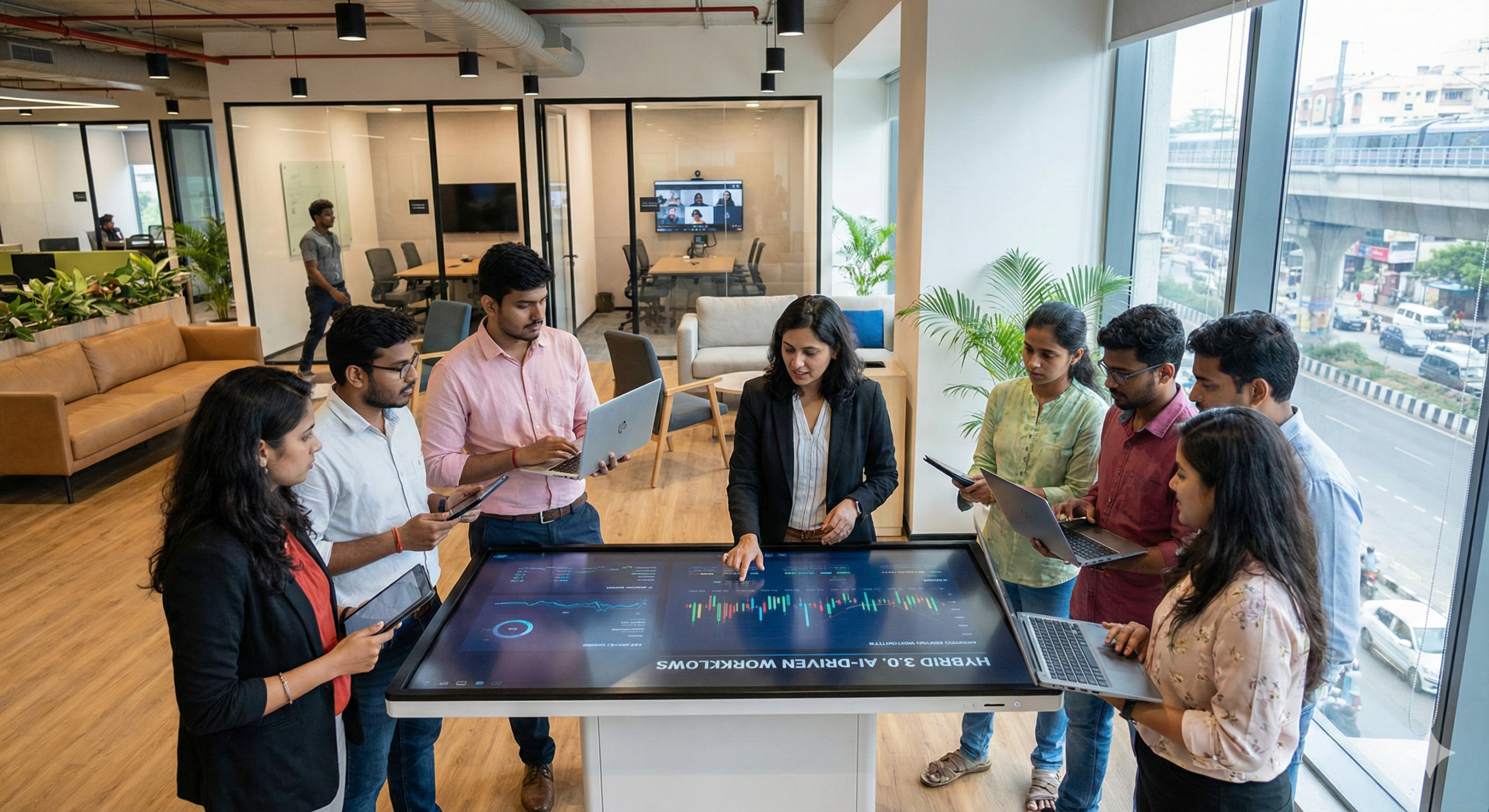
Introduction: Work Culture Reaches a Turning Point Four years after the pandemic triggered remote and hybrid processes, Indian enterprises have entered a new phase: Hybrid 3.0.
Live audience, sentiment and engagement metrics will appear here after analytics integration. No fabricated performance numbers are displayed.
Introduction: Work Culture Reaches a Turning Point
Four years after the pandemic triggered remote and hybrid processes, Indian enterprises have entered a new phase: Hybrid 3.0. This model blends physical presence, AI-assisted workflows, decentralised teams, and digital-first infrastructure.
2025 was the year Indian companies learned that hybrid work is not a temporary fix — it is a structural shift redefining how businesses operate.
Hybrid 3.0: What It Really Means
- Hybrid Is Now Designed, Not Improvised
Unlike early hybrid models driven by necessity, Hybrid 3.0 is built intentionally.
Companies now plan:
• role-based hybrid schedules
• productivity-linked flexibility
• outcome-driven KPIs
• AI-enabled workflow measurement
Hybrid 3.0 optimises both employee comfort and organisational output.
- Offices Are Becoming Collaboration Zones
Workspaces are no longer rows of desks — they are:
• brainstorming hubs
• studio-style meeting zones
• AI-enabled conference rooms
• innovation labs
Physical office time is reserved for collaboration, not routine tasks.
- AI is Automating 30–40% of Operational Work
Across industries, AI tools are now automating:
• documentation
• meeting summaries
• customer support
• logistics planning
• HR queries
• financial reconciliation
This reduces workload and shifts human effort toward strategic tasks.
Why Indian Companies Embrace Hybrid 3.0 Faster Than the West
- India Has a Younger Workforce
With millions of Gen-Z professionals entering the job market, flexibility is no longer a perk — it is a hiring requirement.
- Digital Infrastructure Is Now Ubiquitous
Affordable data and widespread smartphone usage enable seamless remote workflows.
- Enterprises Realised Productivity Improves
Most organisations reported 10–20% higher productivity under structured hybrid models.
Challenges Hybrid 3.0 Must Still Solve
- Managerial Skill Gaps
Middle managers struggle with hybrid governance, performance tracking, and culture-building.
- Cybersecurity Risks
Distributed teams increase vulnerability to phishing, data theft, and compliance breaches.
- Employee Burnout
Always-on digital communication creates fatigue and blurred boundaries.
Conclusion
Hybrid 3.0 is no longer a trend — it is the default.
India’s work culture is shifting from time-bound presence to performance-bound delivery, supported by intelligent AI systems.

Join the conversation